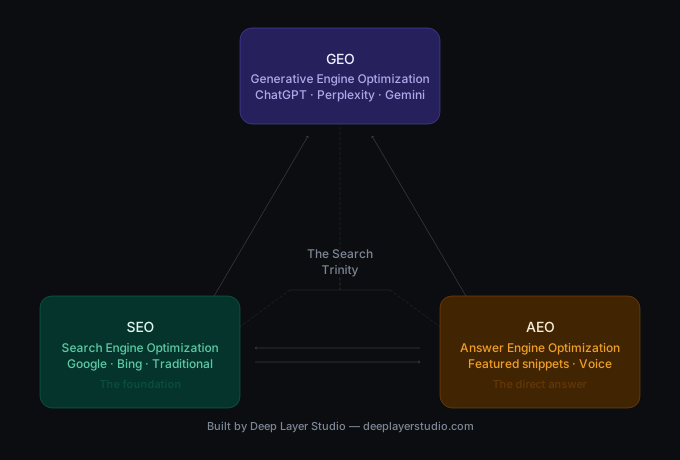
You've heard of SEO. Maybe you've heard of AEO. But GEO? That's the one most businesses are completely missing right now, and it's quietly becoming the most important of the three.
Let's break down all three, what they actually do, and why you need all of them working together.
SEO — The Foundation
Search Engine Optimization is the oldest of the three. It's everything you do to make Google and Bing rank your website higher in traditional search results, the blue links people have been clicking since 1998.
The basics haven't changed much: clean code, fast load times, relevant content, strong meta descriptions, proper heading structure, and backlinks from trusted sites. What has changed is how competitive it's become. There are over 1.9 billion websites on the internet. Standing out in a standard Google search requires real work, real content, and real consistency.
SEO is still essential. Without it, nothing else matters, you're invisible before anyone even gets to ask a question.
AEO — Answering the Machine
Answer Engine Optimization is SEO's younger sibling. It emerged as voice search and featured snippets became mainstream, when people stopped typing "best web designer Knoxville" and started asking "who is the best web designer in Knoxville?"
AEO is about structuring your content so search engines can extract a direct answer and surface it without the user clicking anything. Those answer boxes at the top of Google results? That's AEO at work.
The key tools are structured data (JSON-LD schema), FAQ sections written in plain question-and-answer format, and content that directly answers specific questions your audience is asking. Instead of writing for humans who scroll, you're also writing for algorithms that extract.
Done right, AEO gets your content featured above the competition, even above websites that outrank you in traditional SEO.
GEO — The New Frontier
Generative Engine Optimization is the newest and least understood of the three. It's what you do to make AI systems, ChatGPT, Perplexity, Google's AI Overviews, Claude, Gemini, mention your business when someone asks them a question.
Think about how many people now open ChatGPT and ask "find me a web designer in Knoxville" instead of Googling it. That number is growing every single month. When someone asks an AI that question, the AI pulls from what it knows, which comes from crawling the web, reading structured data, and processing authoritative content.
GEO means making sure your content is crawlable, citable, and authoritative enough for AI systems to reference. That means clear Organization schema on every page, consistent NAP (Name, Address, Phone) data across the web, well-structured long-form content that answers real questions, and a strong presence on platforms AI systems trust, like industry directories, local business listings, and editorial mentions.
This is not the future. This is right now. If your website isn't optimized for AI search, you're already invisible to a growing percentage of your potential customers.
The Trinity
Here's why you need all three working together:
SEO gets you found in traditional search, still the highest volume channel. AEO gets your content featured as the direct answer, higher visibility, higher trust. GEO gets you mentioned by AI systems, the fastest-growing search channel of 2025 and 2026.
A site optimized for only one of these is leaving traffic on the table. A site optimized for all three is positioned to dominate search however people choose to find you, whether they type, speak, or ask an AI.
At Deep Layer Studio, every site we build is optimized for all three from day one. Clean code for SEO. Structured data and FAQ content for AEO. JSON-LD Organization schema and authoritative content architecture for GEO.
Because your customers are searching in more ways than ever before. Your website needs to be ready for all of them.